Perinatal Trauma and PTSD: Understanding Trauma During Pregnancy, Birth and Early Parenthood
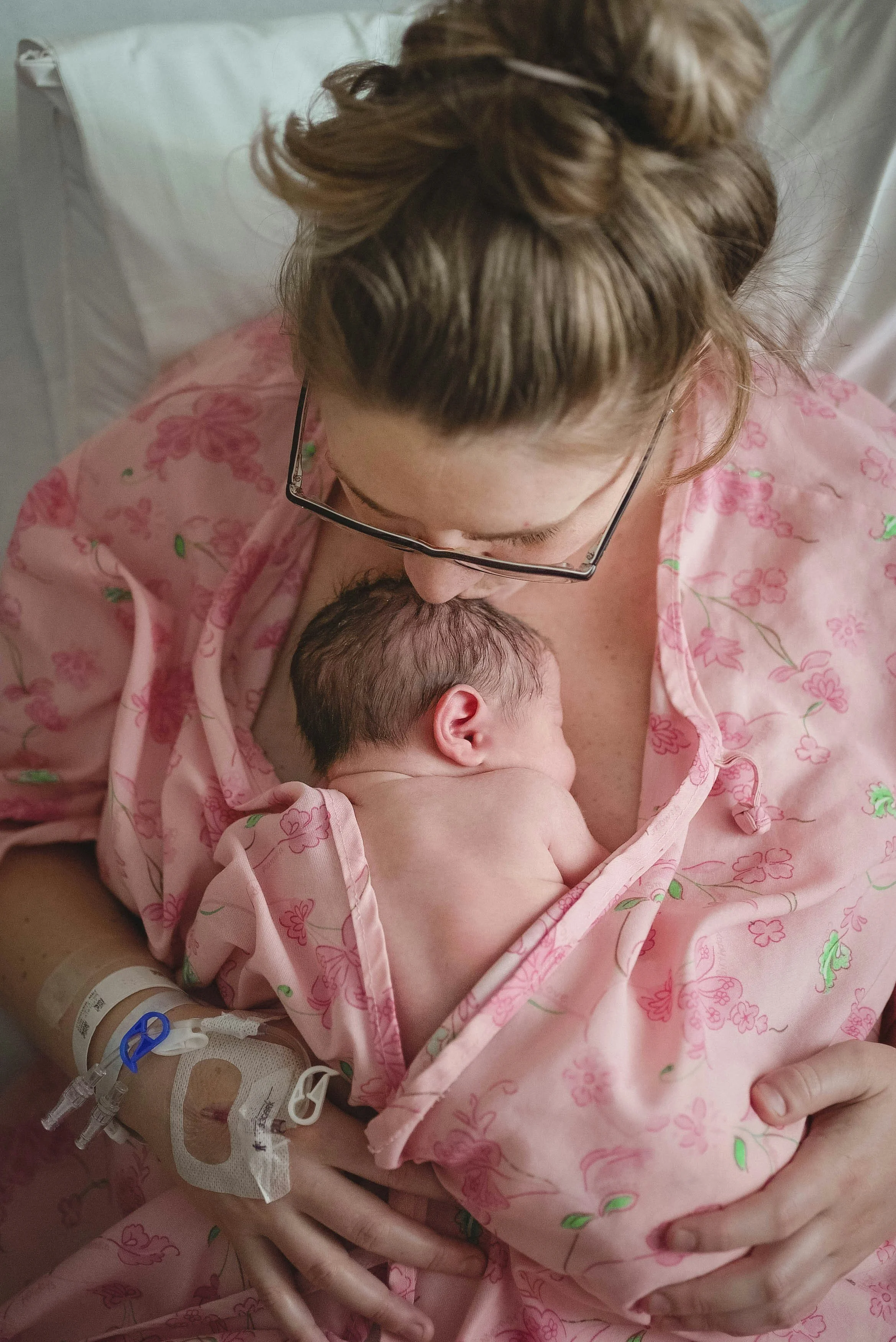
Photo by Jimmy Conover on Unsplash
Share
Perhaps everyone told you your baby was healthy, so you should be grateful.
Perhaps your birth was "routine" on paper, yet you were left feeling frightened, powerless, or unlike yourself.
Or perhaps becoming a parent has stirred up experiences you thought you'd left behind.
Whatever happened, you might be wondering why it still affects you.
Trauma during the perinatal period isn't limited to what happens during labour or birth. It can arise at any stage of pregnancy, birth or early parenthood, and it affects everyone differently.
This article explores what perinatal trauma is, why trauma isn't always visible, and how understanding trauma can be the first step towards healing and support.
What is perinatal trauma?
Perinatal trauma refers to traumatic or deeply distressing experiences that occur during pregnancy, birth or early parenthood. For some people, this period can also bring earlier traumatic experiences, such as childhood trauma, sexual assault, family violence, or previous medical trauma, back to the surface.
Birth trauma is one of the most recognised forms of perinatal trauma, but it isn't the only one. Perinatal trauma is an umbrella term that recognises that trauma can occur at any stage during the perinatal period.
“Even though birth probably contributes a large proportion of people who identify as having trauma in this space, I think we’re blinded somewhat to the fact that it can happen elsewhere.”
— Helen Nightingale
Episode 10, Perinatal Stories Australia podcast
Examples include traumatic birth, pregnancy complications (such as pre-eclampsia), pregnancy loss, neonatal intensive care (NICU) admission, hyperemesis gravidarum, fertility or reproductive trauma, and breastfeeding trauma.
This isn't an exhaustive list, and not everyone who goes through these experiences will develop trauma.
Many people think trauma only refers to life-threatening events or physical injuries. But trauma isn't defined solely by what happened—it's also shaped by how the experience affected you. Two people can experience similar events and respond very differently. One person may gradually recover without ongoing distress, while another may continue to feel overwhelmed long after the danger has passed. Both experiences are valid.
Your experience doesn't have to meet anyone else's threshold for trauma before it deserves compassion and support. If it continues to affect you, your experience matters.
Birth trauma isn’t always physical
“A traumatic childbirth experience refers to a woman's experience of interactions and/or events directly related to childbirth that caused overwhelming distressing emotions and reactions; leading to short and/or long-term negative impacts on a woman’s health and wellbeing.” - Leinweber et al. (2022)
Birth trauma is often associated with emergency situations, medical complications or experiences where a parent or baby’s safety was at risk. These experiences can be deeply traumatic.
In your words.
“I was convinced that my world was ending every day for a few weeks after my son was born. Every afternoon, I would have a panic attack…. It was debilitating. Every single day, my husband would have to sit with me and remind me it's done. Obviously, not all of it was over because I still had health problems, but we're home, we're safe. We had to do that chat every single day.”
But birth trauma is not always about a medical event or physical injury. A person does not need to have visible injuries or a medically complicated birth for their experience to have a lasting impact. For some parents, the most distressing parts of their birth experience involve fear, loss of control, feeling unheard, having their concerns dismissed, or feeling that their needs or choices were not respected.
A birth can be described as "routine" or "successful" by others and still be traumatic for the person who experienced it. Having a healthy baby does not erase the fear, distress or sense of powerlessness someone may have felt. For many people, the deepest wounds are psychological.
Birth trauma can be physical, psychological, or both. Your birth does not need to appear traumatic to others for it to be traumatic.
Does trauma have to be "bad enough"?
One of the most common responses after a traumatic experience is to question whether what you went through was "bad enough" to be considered trauma.
You might find yourself comparing your experience to someone else's, telling yourself that other people had it worse, or wondering if you should simply be grateful that you and your baby are okay.
In your words.
“I didn’t think I had birth trauma. And then I was pregnant, and I was confronted with the idea that I had to give birth again and I just had weeks of panic attacks.”
These thoughts are incredibly common—but they can also make it harder to acknowledge what you've been through, leaving you feeling as though you need to “earn” the right to call something traumatic.
Many people minimise their own experiences because they don't fit their idea of what trauma is "supposed" to look like.
It's easy to wonder whether your experience was "serious enough." But trauma isn't a competition, and it isn’t measured by how dramatic an event appears or whether someone else had it worse.
“Our nervous system doesn’t discriminate between our trauma and someone else’s. It doesn’t say ‘I will only mildly dysregulate you because someone else had it worse.’ Trauma isn’t measurable and so it’s not comparable.” - Dr Jen Wolkin
Your experience deserves acknowledgement, compassion and support, even if you've spent a long time convincing yourself it wasn't "bad enough."
How common is perinatal trauma?
Experiencing trauma during pregnancy, birth or early parenthood is more common than many people realise.
In your words.
“I walked to his nursery and just fell to my knees and hysterically cried and cried and cried… I've got a very white shower and it produces a shadow and just not recognising my body in the shadow as well—that really got to me. And I remember just sobbing in the shower. And I'm sure not everyone feels like this after giving birth. Why has it happened to me? Why is this my story? I completely lost myself. I didn't know who I was.”
Research suggests that around one in three mothers describe the birth of their baby as traumatic. Most people gradually recover with time and support, but for some, the emotional impact continues long after the event itself.
Postpartum post-traumatic stress disorder (PTSD) is less common than birth trauma, but it is still significant. Around one in twenty mothers show symptoms of PTSD within the first 12 weeks after birth, with studies suggesting up to 15% of parents may experience postpartum PTSD during the first six months after birth.
Most research has focused on mothers, but trauma during the perinatal period isn't limited to the person giving birth. Partners, support people, and healthcare professionals can also experience trauma after witnessing distressing or life-threatening events during pregnancy or birth.
Experiencing trauma does not necessarily mean someone will develop PTSD. However, these figures remind us that perinatal trauma is far from rare—and that no one should feel they have to struggle alone.
What is PTSD?
Most people gradually recover after a traumatic experience. While difficult memories may remain, they usually become less distressing over time.
For some people, however, the brain and body continue to respond as though the danger hasn't passed, even when they are safe. This is known as post-traumatic stress disorder (PTSD).
In your words.
“We just had to keep pinching ourselves that she was here and we got our happy ending. At about 3 weeks postpartum, I don’t know what happened, but something changed. Like a tonne of bricks, I was absolutely consumed by this horrible, horrible feeling of sadness, and devastation… It was as if we were in the nightmare situation and not the happy ending. And I was absolutely taken aback by it.”
PTSD isn't always immediate. For some people, it develops soon after a traumatic experience, while for others, symptoms may not become noticeable until weeks or months later.
PTSD isn't a sign of weakness, and it doesn't mean you're unable to cope. It's a recognised mental health condition that can develop after experiencing or witnessing a traumatic event.
PTSD related to pregnancy, birth, or early parenthood can affect many aspects of daily life, but it doesn't look the same for everyone. Understanding the common signs and symptoms can help you recognise when additional support may be helpful.
What does PTSD look like?
PTSD can look different from person to person, but one of its defining features is that the trauma doesn't feel as though it's in the past. Even when you know you're safe, your mind and body may continue to respond as though the danger is happening now.
In your words.
“Everything that I saw when I closed my eyes was terrifying, so I didn't want to sleep... I just remember that gut-wrenching, sick feeling. The flashbacks started. I went into the room to have the appointment with this midwife, and I completely broke down. I wouldn’t even say a panic attack. It was literally a breakdown. I couldn’t talk, I couldn’t breathe.”
You may find yourself avoiding talking about the birth, returning to the hospital where you gave birth, or feeling anxious about future pregnancies or medical appointments.
People with PTSD may experience unwanted memories, nightmares, or flashbacks that make it feel as though they are reliving the event. They may avoid places, conversations, or reminders that bring the experience back.
Some people feel constantly on edge, are easily startled, find it difficult to sleep, or feel as though they are always waiting for something else to go wrong. Others describe feeling emotionally numb or disconnected from themselves, their baby, or the people around them. Some experience intense guilt, shame, or self-blame about what happened.
In your words.
“[Birth Trauma Australia] have a Facebook group that I've been a part of… I didn't know what tomorrow looked like, and I found a person there who had a very similar experience to me, and I just messaged them and I just went, ‘It's been two years. Can you tell me how you are? Are you okay?’ And the support that outpoured from her! And she just told me where she was two years down the track, it gave me hope. And that's what I really just needed.”
These experiences can be frightening and exhausting, and they can affect many aspects of daily life, but they are recognised responses to trauma—not a sign that you're "broken" or failing to cope.
If these experiences sound familiar, it's important to know that you don't have to carry them alone. PTSD is the second most common mental health condition in Australia after depression, yet only around half of those affected seek treatment. You don’t have to be one of them. Reaching out is not a sign of weakness—it can be the first step towards recovery.
Recovery is possible
Remember…
Recovery doesn't mean forgetting what happened or never thinking about it again. It means the trauma no longer defines your everyday life—and that you don't have to carry it alone.
Experiencing trauma during pregnancy, birth, or early parenthood can change the way you see yourself, your body, your relationships, or the world around you. It can make it difficult to feel safe, to trust yourself, or to believe that things will ever feel different.
But recovery is possible.
There is no single "right" path to recovery. What matters is finding the support that feels safe, appropriate and right for you.
Support after trauma
Whether you're living with PTSD or continuing to feel affected by perinatal trauma, you don't have to manage it on your own. Effective, evidence-based care is available.
In your words.
“The door is still open for sure. But it feels a lot less fiery. The redness in it has been taken out, it's getting yellow and soon it will become just a rainbow. It's just going to be something that happened, punctuated my life, but it's not got that grief or trauma attached to it."
Recovery often involves different forms of support. Time and space to process what happened can play an important role, whether through peer support, support groups, trusted family and friends, or support from a healthcare professional.
For people experiencing PTSD, Phoenix Australia recommends trauma-focused psychological therapies as first-line treatments, including Eye Movement Desensitisation and Reprocessing (EMDR) and trauma-focused cognitive behavioural therapy (TF-CBT). Some people may benefit from medication, particularly when PTSD occurs alongside anxiety, depression, or significant sleep difficulties.
Whatever your path to recovery looks like, feeling heard, believed, and understood can make a meaningful difference. With the right support, recovery is possible.
Feeling overwhelmed by all the unfamiliar terms?
The world of perinatal mental health can come with a whole new vocabulary—from mental health diagnoses and treatments and abbreviations. If you come across a word or acronym you don't recognise, our Perinatal Mental Health Glossary explains many of the common terms you may come across in your interactions with care providers.
Gentle reminders
Your experience doesn't have to involve physical injury or a medical emergency to be traumatic.
Feeling grateful and feeling traumatised are not mutually exclusive.
Trauma isn't a competition. Your experience doesn't have to be "bad enough" before it deserves acknowledgement, compassion, or support.
You don't have to earn the right to call something traumatic.
Trauma isn't always visible—but that doesn't make it any less real.
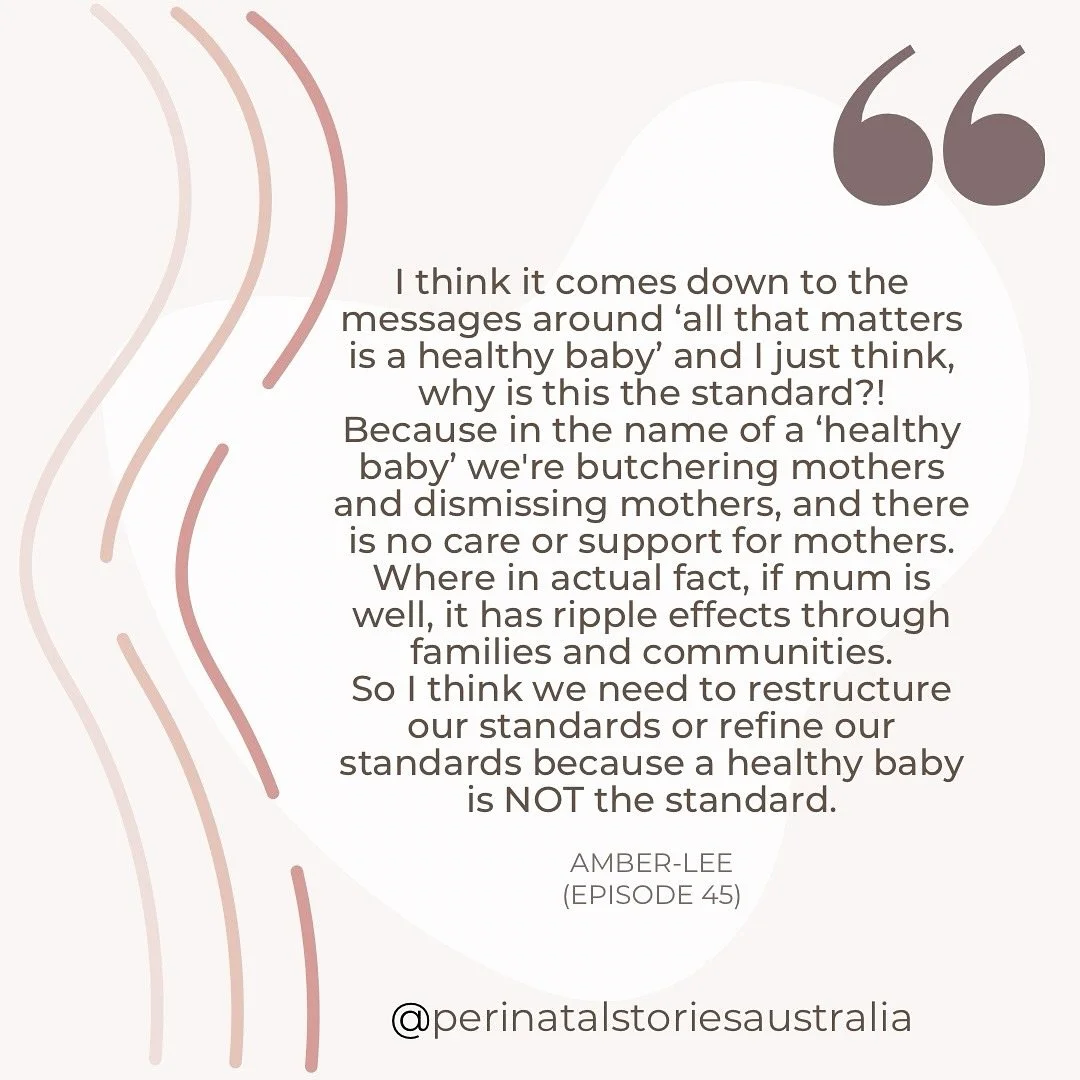
Being told "all that matters is a healthy baby" doesn't erase your experience. You matter too.
Two people can experience the same event and respond very differently. Neither response is wrong.
Your response to trauma is not a moral failing or a personal weakness.
Trauma isn't something you choose, and it isn't your fault.
Healing isn't about forgetting—it's about no longer carrying it alone.
Support services and resources
If this article has resonated with you, you don't have to work through it alone. Whether you're looking for information, someone to talk to, or specialist support, these Australian organisations can help.
You don't have to know exactly what kind of help you need before reaching out. Taking the first step is enough.
In your words.
“I knew that I was just sinking. I felt that weight on my chest was back, but it also wasn't just the anxiety anymore. It was that depression of the constant crying. I didn't want to be around my baby. I just wanted to lock myself in the bedroom because if I locked myself in the bedroom and wasn't near her, I didn't have to think about all the things that could go wrong… And so I rang the doctor. She got me in. And I remember I wrote down everything. I wrote a list of what I was feeling because I know if I have to say it, I'll cry and then I won't be able to speak. So I wrote it all down and I literally got to her room and I was like, ‘here, read this’. And so she read it and then she talked about my options.”
Your GP, midwife, obstetrician or maternal and child health nurse can listen to your concerns, screen for anxiety, depression or PTSD, prepare a Mental Health Treatment Plan (where appropriate), and refer you to specialist perinatal mental health services
Birth Trauma Australia provides information, education, advocacy, and support for people affected by birth trauma
COPE (Centre of Perinatal Excellence) offers evidence-based information about perinatal mental health, screening tools, and a national directory of services
PANDA (Perinatal Anxiety and Depression Australia) provides free, confidential support for expecting and new parents through its National Perinatal Mental Health Helpline (1300 726 306)
Gidget Foundation Australia provides specialist psychological support for expecting, new, and prospective parents, including telehealth and in-person services
ForWhen is a free national navigation service that helps expecting and new parents connect with local perinatal mental health support (1300 24 23 22)
Phoenix Australia provides trusted information about psychological trauma and PTSD, as well as evidence-based treatment guidelines
Blue Knot Foundation provides information and support for people living with complex trauma, childhood trauma, and dissociation
Sources
Alcorn, K. L., O'Donovan, A., Patrick, J. C., Creedy, D., & Devilly, G. J. (2010). A prospective longitudinal study of the prevalence of post-traumatic stress disorder resulting from childbirth events. Psychological Medicine, 40(11), 1849–1859. https://doi.org/10.1017/S0033291709992224
Birth Trauma Australia. (2023). Birth Trauma Awareness Week 2023. https://birthtrauma.org.au/birth-trauma-awareness-week-2023/
Leinweber, J., Fontein-Kuipers, Y., Thomson, G., Karlsdóttir, S. I., Nilsson, C., Ekström-Bergström, A., Olza, I., Hadjigeorgiou, E., & Stramrood, C. (2022). Developing a woman-centered, inclusive definition of traumatic childbirth experiences: A discussion paper. Birth, 49(4), 687–696. https://doi.org/10.1111/birt.12634
PANDA (Perinatal Anxiety & Depression Australia). (n.d.). Birth trauma and recovery. https://panda.org.au/articles/childbirth-trauma-and-recovery/
Phoenix Australia. (2022). PTSD Awareness Day 2022. https://www.phoenixaustralia.org/news/ptsd-awareness-day-2022/
Phoenix Australia (2026). PTSD Awareness Day. https://www.phoenixaustralia.org/ptsd-awareness-day/
Phoenix Australia. (2025). Australian Guidelines for the Prevention and Treatment of Acute Stress Disorder, PTSD and Complex PTSD. https://www.phoenixaustralia.org/australian-guidelines/
Pregnancy, Birth and Baby. (2023). Trauma childbirth experience. Australian Government. https://www.pregnancybirthbaby.org.au/amp/article/birth-trauma-emotional
This blog is informed by lived experience and is not intended as medical advice.
If you or someone you know needs support, Perinatal Stories Australia encourages you to reach out to Lifeline (13 11 14), 13YARN (13 19 76), or Suicide Callback Service (1300 659 467).