
Real Stories
Lived experiences of perinatal mental health in Australia
Holding space for the stories we often keep to ourselves.
I know first-hand how isolating it can feel when you’re experiencing perinatal mental health challenges — like you’re the only one thinking or feeling this way. That’s why sharing lived experience matters.
These are real stories from mothers across Australia who have moved through pregnancy, birth, and postpartum while navigating depression, anxiety, OCD, trauma, bipolar disorder, psychosis, and recovery.
My hope is that these stories help reduce stigma, offer insight into the support and services that can help, and inspire those on their own healing journey. More than anything, I hope you know you’re not alone.
Thank you for trusting me with your stories — it’s an honour I don’t take lightly.
Explore Stories by Experience.
All Episodes.

45 | Amber-Lee
When Amber-Lee found herself unexpectedly pregnant, she knew life would change — but not in the ways she experienced. Through two pregnancies complicated by hyperemesis, a traumatic birth, and a challenging postpartum period, she navigated trauma, mental ill health, and the pressure of being ‘the strong one’ while silently struggling.

29 | Amelia
After a straightforward physiological birth, Amelia experienced a sudden postpartum haemorrhage that separated her from her newborn and triggered an acute mental health crisis. She developed mania, insomnia, and postpartum psychosis, which she largely concealed from her care providers until she sought urgent help. Amelia reflects on the challenges of recognition, recovery, and preparing for a subsequent pregnancy with her mental health in mind.

28 | Jessie
Jessie’s story begins in early motherhood, when she was diagnosed with depression and anxiety and experienced vivid intrusive thoughts, panic attacks, and persistent distress. After relocating to rural NSW for family support, she struggled to access the right professional care. Jessie shares how advocating for herself helped change the trajectory of her motherhood experience.

25 | Ashlee
As a perinatal and infant mental health psychologist, Ashlee expected the transition to motherhood to come naturally. Instead, she experienced severe anxiety in pregnancy and depression in postpartum, missing her own red flags while navigating feeding, sleep, and health challenges with her daughter. Ashlee reflects on the complexity of recognising mental ill health in motherhood, alongside her diagnosis of autism, and her journey towards seeking support and recovery.

22 | Gemma
With a background in social work, Gemma didn’t expect the transition to motherhood to feel so disorienting. From early pregnancy, she experienced a profound sense of identity loss and anxiety, followed by a challenging postpartum marked by guilt and unmet expectations. Gemma reflects on the barriers she faced accessing support, and how reconnecting with herself — through therapy, work, and movement — helped her find her footing in motherhood.

21 | Sarah
After leaving the mother-and-baby unit, Sarah felt proud of her recovery — but her story didn’t end there. A relapse marked by severe depression led to further hospital admissions, forcing her to confront the reality of non-linear healing and its impact on her sense of self, including her experience as a self-confessed ‘frequent flyer’ of the MBU. In part two, Sarah reflects on the tension between progress, setback, and identity.

17 | Jess
With a history of anxiety and depression, Jess entered pregnancy with a plan to protect her mental health. But when her son required urgent medical care and a prolonged NICU stay, her own wellbeing was overshadowed by the demands of caring for a critically unwell baby. She reflects on the lasting impact of the NICU experience, and the journey of finding herself again in motherhood.

16 | Emma
After years of infertility, IVF, and complex pregnancies, Emma entered motherhood already carrying a significant emotional load. Antenatal anxiety, birth trauma, and further life stressors compounded her mental health, eventually leading to an admission to a mother-and-baby unit. Emma reflects on her journey towards prioritising her own healing, and how her experience has shaped her advocacy for other mothers.

12 | Nikolina
Bubbly and outgoing, Nikolina had never experienced mental ill health before motherhood. But within weeks of giving birth, she was confronted by the sudden onset of perinatal anxiety and depression, with symptoms including insomnia, tearfulness, and an overwhelming sense of not being herself. As she pushed through in silence, she marked time against her baby’s milestones, hoping things would improve by six weeks — until her husband helped her recognise that she needed support.

09 | Jade
After the birth of her son, Jade’s mental health declined amidst ongoing sleep deprivation and she was initially misdiagnosed with postpartum depression. Despite years of seeking support and trying multiple treatments, she continued to experience depressive episodes. It wasn’t until she saw a perinatal psychiatrist that she received a different diagnosis — a turning point that brought both clarity and grief.
07 | Lisa
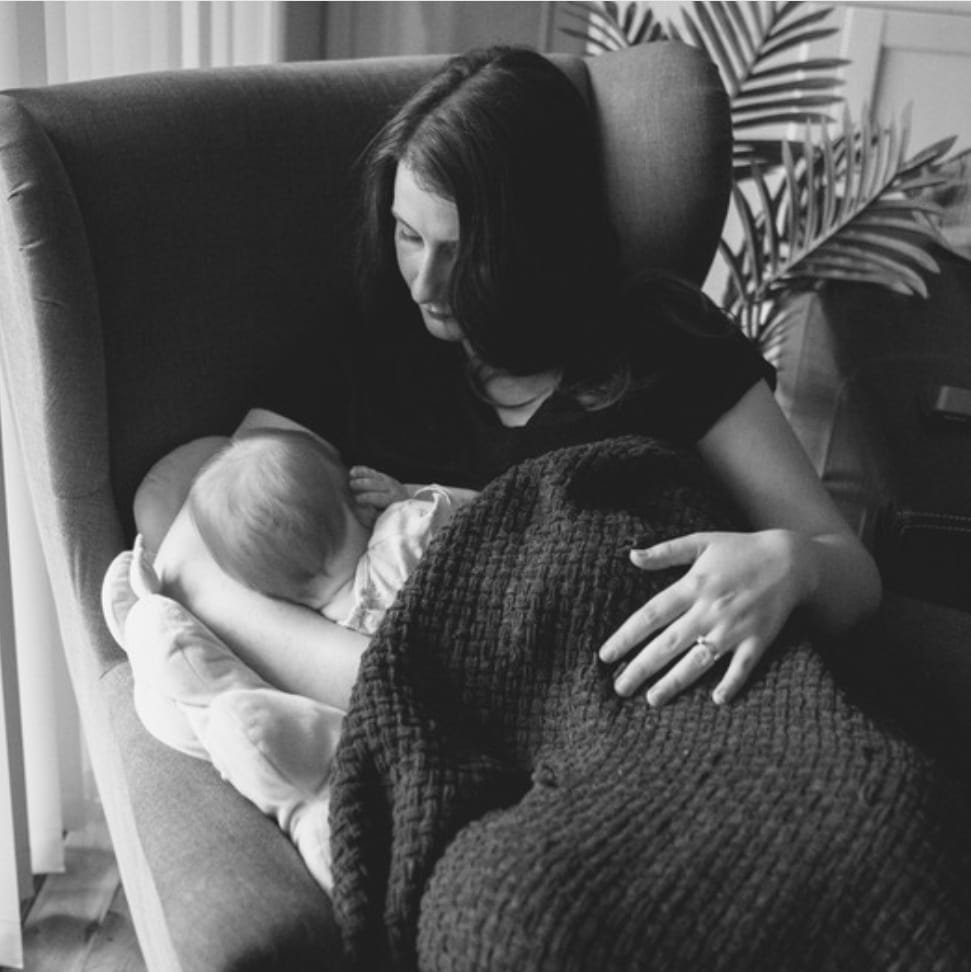
With a long list of achievements behind her, Lisa assumed motherhood would come easily. Instead, the lack of control and constant crying from her colic baby left her feeling like she was failing. She was diagnosed with depression at five months postpartum, but through therapy, support, and learning to ask for help, Lisa approached her second pregnancy differently, creating space for a different experience of motherhood.
What Listeners are Saying.
-
![A pink heart outline with a smaller white heart inside, on a white background.]()
"She is a wonderful storyteller and her personal perinatal story is one to be told. So much love and respect, Rebecca. Can't wait for the rest of your episodes"
Kathryn
(via Instagram) -
![A pink, hand-drawn heart with a crackle effect on a white background.]()
"Can't recommend enough! This is one of the most important podcasts to be released this year. It is absolutely crucial for the topics of mental health throughout pregnancy, birth, postpartum (and beyond) to be destigmatised and brought into the spotlight and Rebecca has done this stunningly. She speaks so vulnerably and openly and not only is it heartbreaking but it's also in many places painfully relatable. Thank you for such a wonderful podcast!"
tattooloo
(Apple Podcast Review) -
![A heart shape with rough, uneven edges and a smaller heart outline inside, in a light pink colour.]()
"This podcast will change lives - I'm sure of it"
Jade
(via Instagram) -
![A beige heart outline with a smaller, overturned heart shape inside it, on a white background.]()
"Great podcast for a great cause! Love everything about this podcast. It’s shedding light surrounding the very well hidden but alarmingly high statistics of mental health around pregnancy, birth and post partum… These stories definitely help in making you feel like you’re not alone. Thank you!"
theawesomeabsol
(Apple Podcast Review) -
![A pink, hand-drawn heart with a distressed texture on a white background.]()
"The most important podcast any mumma will listen to! I can’t even put into words how life changing this podcast is and there are only 3 episodes so far!... This podcast is a monumental leap forward in breaking the stigma surrounding PNDA and helping all mums realise there is most definitely help available and you deserve that help!"
JessieF0895
(Apple Podcast Review) -
![A pinkish-beige heart outline with a distressed, rough texture on a white background.]()
"This podcast reminds me I’m not alone! Rebecca is amazing and I am so grateful for her podcast. She reminds me that I’m not alone in my perinatal/postpartum mental health struggles. She reminds me that I don’t need to feel ashamed for having these struggles... Thank you to all of those who are bravely sharing their stories on this podcast to help us all remember- we are not broken, we are not alone, we deserve support, and we matter."
ACSH21
(Apple Podcast Review)


